
Blog
Dental hygiene tips for healthy teeth & gums
Root Canal vs Filling vs Crown: What’s the Difference
Dental treatment usually does not come up until something feels different. A twinge when chewing, a dull ache, or sensitivity that shows up on and off. Once that happens, the mind jumps ahead very quickly, often straight to the most serious option it knows, which is usually a root canal. At the same time, there is another thought running alongside it, hoping the problem is small enough for a filling and nothing more.
That tension is where most confusion around root canal vs filling vs crown comes from. These treatments get talked about as if they are alternatives to one another, when in reality they are responses to different stages of damage, stages that don’t always feel very different from the outside.
Why These Three Treatments Feel Interchangeable
From a patient’s point of view, everything happens in the same chair, with similar tools, in the same room. That alone makes fillings, crowns, and root canals blur together. Pain often shifts the focus. It makes problems feel urgent, even when they have been developing quietly in the background.
This is why the difference between filling vs crown vs root canal often feels unclear. The tooth might look fine in the mirror. It might only hurt sometimes. That makes it hard to understand why one treatment is suggested instead of another.
What A Filling Handles And What It Doesn’t
Fillings are typically used for a single problem area. If the cavity is small and the surrounding tooth is still holding up, that approach tends to be sufficient. The tooth keeps doing its job. Chewing feels normal again. Life moves on.
What a filling does not do is make the tooth stronger than it already is. It simply replaces what was lost. That detail gets overlooked a lot in the crown vs filling vs root canal conversation, especially when a tooth has already been treated once and starts acting up again later.
Why Teeth Sometimes Outgrow Fillings
Over time, when more tooth structure is lost, the parts that remain get thinner. Thin tooth walls can flex when you bite down. That flexing does not always cause instant pain, but it can lead to small cracks that slowly become noticeable.
This is usually when things stop making sense. The filling is still there. Nothing looks damaged. So why does it hurt again? It feels confusing because it seems like the same issue is coming back.
That is when root canal vs filling vs crown stops feeling like a simple comparison and starts feeling annoying. The filling did not fail. The tooth itself changed, and that changes what makes sense next.
What A Crown Changes About The Situation
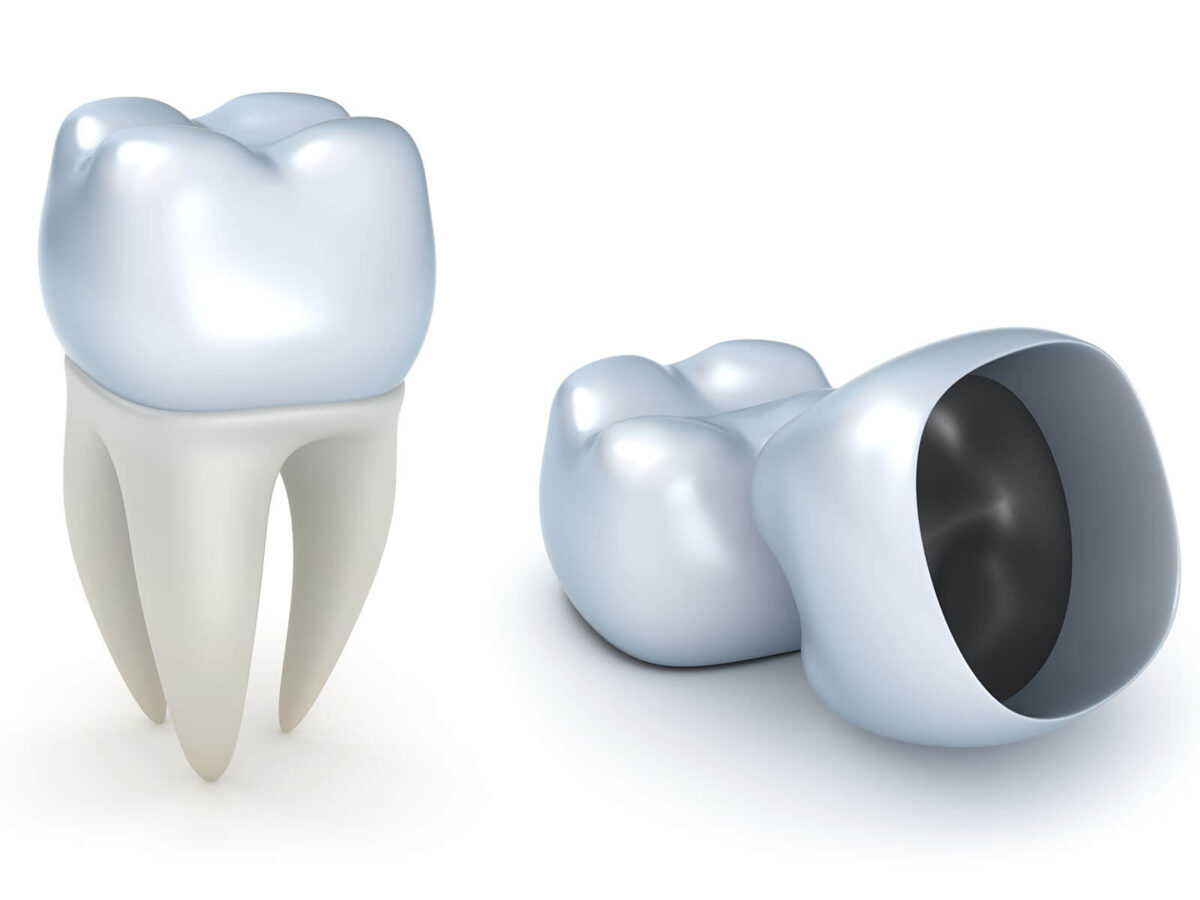
A crown takes a different approach. Instead of repairing one area, it covers the entire visible part of the tooth. Everything underneath is held together and supported as one piece.
Crowns usually come up when a tooth is still alive on the inside but has lost too much strength to rely on a filling alone. It is often after a large cavity, a crack, or a tooth that has already been worked on more than once. At that point, the structure just is not holding up the way it used to.
In the filling vs crown vs root canal discussion, crowns are about preventing future damage as much as they are about fixing current problems.
Why Crowns Sometimes Feel Premature
It can feel strange to hear that a crown is recommended when pain is mild or inconsistent. From the outside, it feels like overkill. From the inside of the tooth, though, things look different.
A weakened tooth does not announce when it is about to fracture. It simply breaks one day. Crowns are often placed to avoid that moment. This preventative thinking is easy to miss when comparing root canal vs crown vs filling, because prevention doesn’t feel urgent until it’s too late.
What A Root Canal Is Actually About
A root canal is usually about what is going on inside the tooth, not just what you can see. When decay goes deep enough, bacteria can reach the delicate area. Pain sometimes follows, but not always. That lack of consistency is what throws people off. A tooth can be infected and still feel mostly fine.
The goal of a root canal is to clear out that infected tissue and close off the inside of the tooth. It is a different kind of fix compared to the others. In crown vs filling vs root canal, fillings and crowns deal with structure and strength, while root canals deal with infection that cannot be handled from the outside.
Why Root Canals Get All The Fear
A lot of the fear around root canals seems to come from stories people have heard rather than the procedure itself. What many people remember as “root canal pain” is often the discomfort that showed up before anything was treated, not what actually happens once things start getting addressed.
Root canals often show up late in the process. By the time one is needed, the tooth has been struggling for a while. Understanding root canal vs filling vs crown earlier often keeps things from reaching that point.
Link Between Crowns And Root Canals
A tooth often feels a little different after a root canal. It remains usable, though it loses some natural give. The change is subtle early on, even though it can raise the chance of cracks down the road.
Because of that, crowns are often suggested after root canals. One takes care of the issue inside the tooth. The other helps the outside hold up better. They are connected in timing, not in purpose.
Situations Where A Crown Doesn’t Mean A Root Canal
Many crowns are placed on teeth that are not infected. Structural weakness alone can be enough. This matters in the filling vs crown vs root canal discussion because a crown is not a signal that a root canal is inevitable.
Situations Where A Root Canal Might Not Need A Crown
Some teeth, especially front teeth, handle less pressure and may function without crowns after root canal treatment. Back teeth usually don’t get that option.
These decisions depend on location, bite forces, and remaining structure, which is why there isn’t one rule that fits every case.
How Dentists Actually Decide
Dentists look at patterns, not just symptoms. X-rays show what the eye cannot see. Exams reveal cracks and wear. All of that information comes together before a recommendation is made.
The goal is not to choose the biggest treatment, but the one that will actually last. That is the real point behind understanding root canal vs filling vs crown.
Why Waiting Complicates Everything
Dental problems rarely pause. They progress. Small cavities deepen. Cracks spread. Infection follows.
Waiting often changes the answer. A filling becomes a crown. A crown becomes a root canal. That progression explains why timing matters more than most people expect.
Conclusion
So, root canal vs filling vs crown is not about picking one option over another. It is about meeting the tooth where it is right now.
Fillings repair limited damage. Crowns protect weakened teeth. Root canals remove infection. Each has a place, and none of them exist without a reason.
It’s not always clear what a tooth really needs. A filling, a crown, or a root canal can all seem like possible choices at the same time. Taking time to understand crown vs filling vs root canal early on often helps keep things from turning more complicated later.

